Pandit Rudra Misir
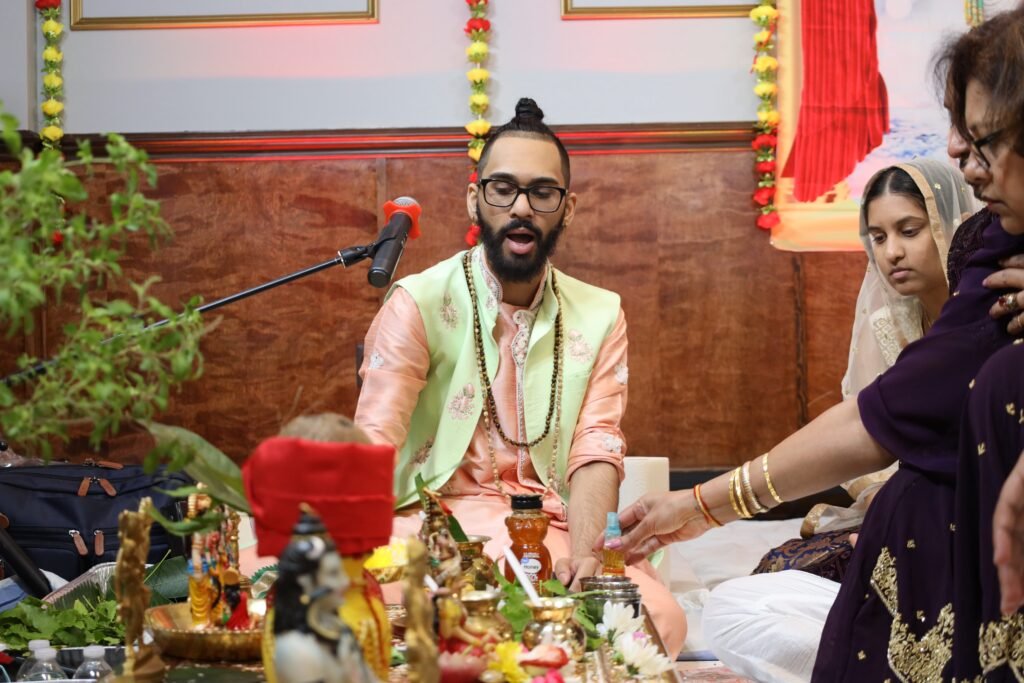
Pandit Rudra Misir was raised in an environment where Sanātana Dharma was not simply observed—it was lived. From a young age, weekends were often spent attending pujas, yajñas, and religious gatherings alongside his father, Pandit Bhisham “Jito” Misir. While that sometimes meant missing parts of a more conventional childhood, it also gave him something deeply formative: consistent exposure to prayer, ritual, scripture, and spiritual teaching.
By the age of ten, Pt. Rudra had already officiated his first havan. As he entered his teenage years, he became increasingly active as a practicing Pandit, eventually growing into a role he has now held for more than a decade.
One of the memories that left a lasting impression on him came from watching his father serve as the Pandawa during the ground puja for a yajña, while his father’s own Guru, Pandit Maheswar Tiwari, served as the officiating Vyaas. For Pt. Rudra, seeing the man he looked up to as Guruji himself look up to and serve his own Guru revealed something profound about humility, lineage, and the responsibility of carrying sacred knowledge forward.
His spiritual education developed not only through formal instruction, but through years of constant immersion. As his father traveled from home to home performing pujas, Pt. Rudra was often there beside him, seated across the puja vedi near the havan kund, assisting and observing. The families and audiences changed from one gathering to another, but Pt. Rudra remained a constant—listening, absorbing, and learning. At home, that education continued through his daily proximity to Guruji.
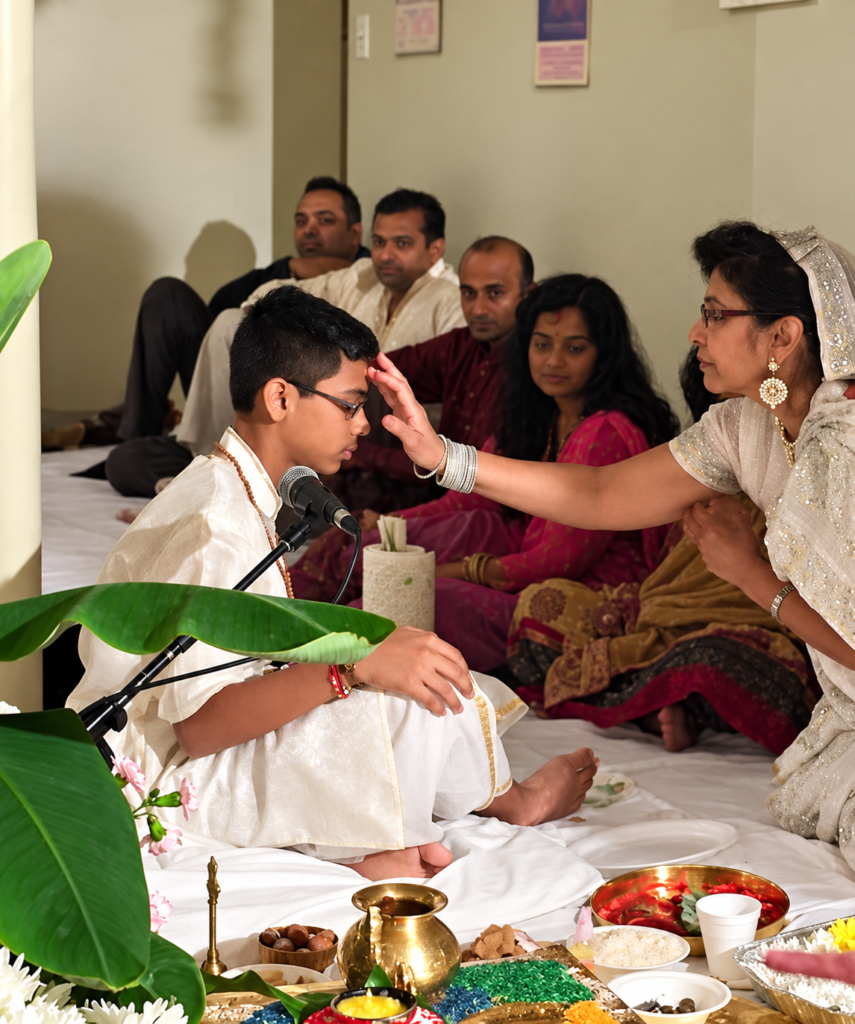
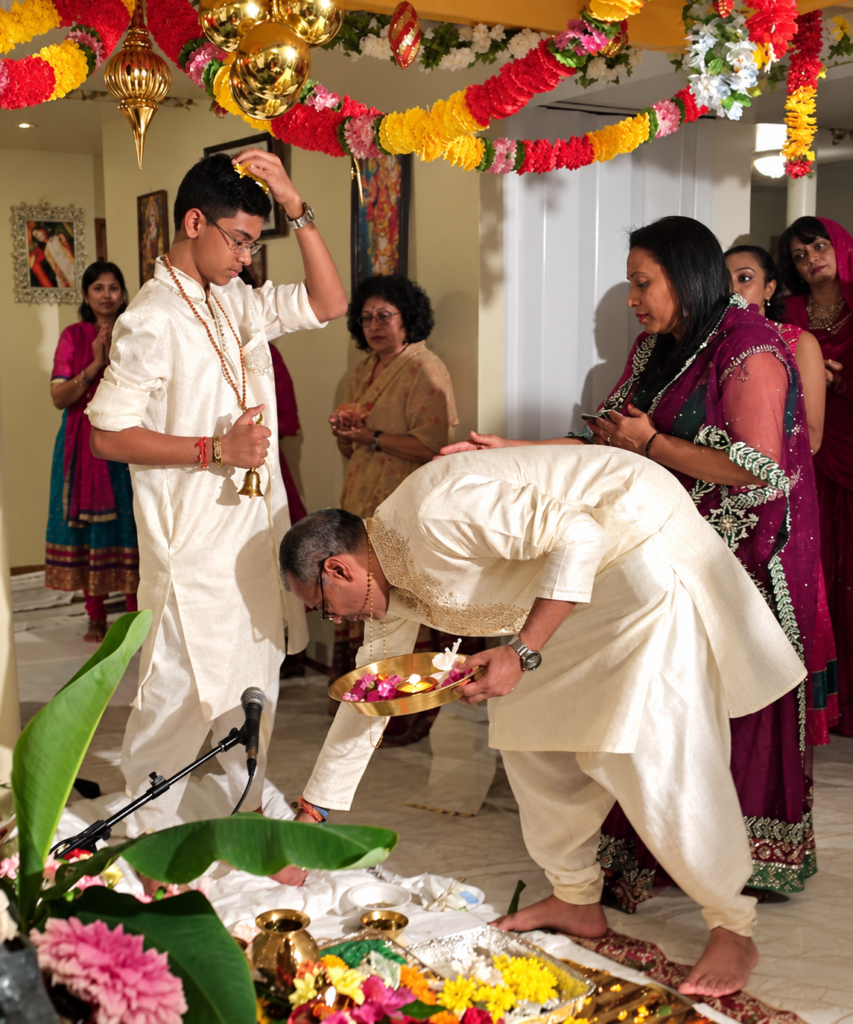
As a child, he also witnessed the evolution of Guruji’s approach to teaching. Younger children were once separated during katha so they could receive simpler lessons, while the adults remained with Guruji. Over time, Guruji chose to bring everyone together so that children and adults could listen, learn, and grow through the same teachings. That approach left a strong impression on Pt. Rudra and continues to shape his own philosophy as a teacher.
One lesson he remembers clearly is Guruji’s analogy of the “God’s Positioning System.” Like a GPS, God provides direction toward our ultimate destination, while still allowing us the freedom to make our own choices. Even when we take a different turn, the path can be recalculated and guidance continues. For Pt. Rudra, teachings such as this made complex spiritual ideas understandable and relevant to everyday life.
Pt. Rudra does not define himself by one rigid philosophical label. Rather, he sees his own understanding as something that is still developing through continued study, questioning, and experience. He is drawn to the interconnectedness of Hindu scripture and believes that every text can offer something meaningful depending on the perspective of the seeker. Whether one approaches the Ramayana through devotion, philosophy, symbolism, or love of Bhagavān, the deeper truths ultimately remain connected.
His personal devotion has also evolved over time. From childhood, Pt. Rudra felt a strong connection to Lord Shiva, whose presence in the Shiva-Parvati murti at the family altar gave him a sense of protection and constancy. As he grew older and deepened his understanding of Devi, he became especially drawn to Mother Kali. For him, the contrast between the gentler expression of Shakti in Parvati and the more powerful, assertive expression in Kali reflects different manifestations of the same Divine Mother.
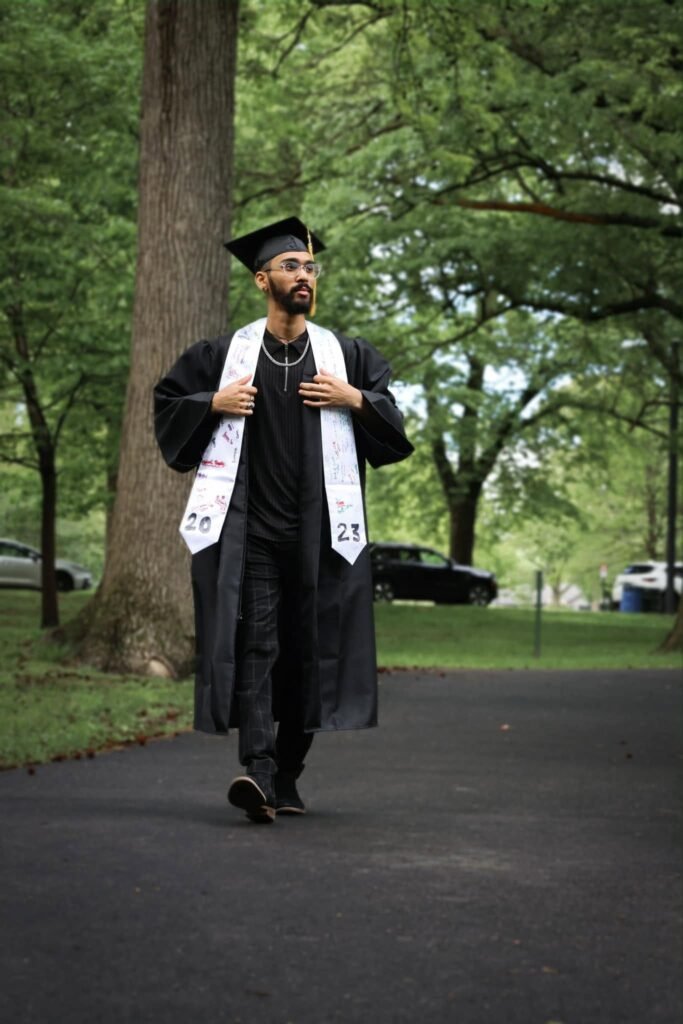
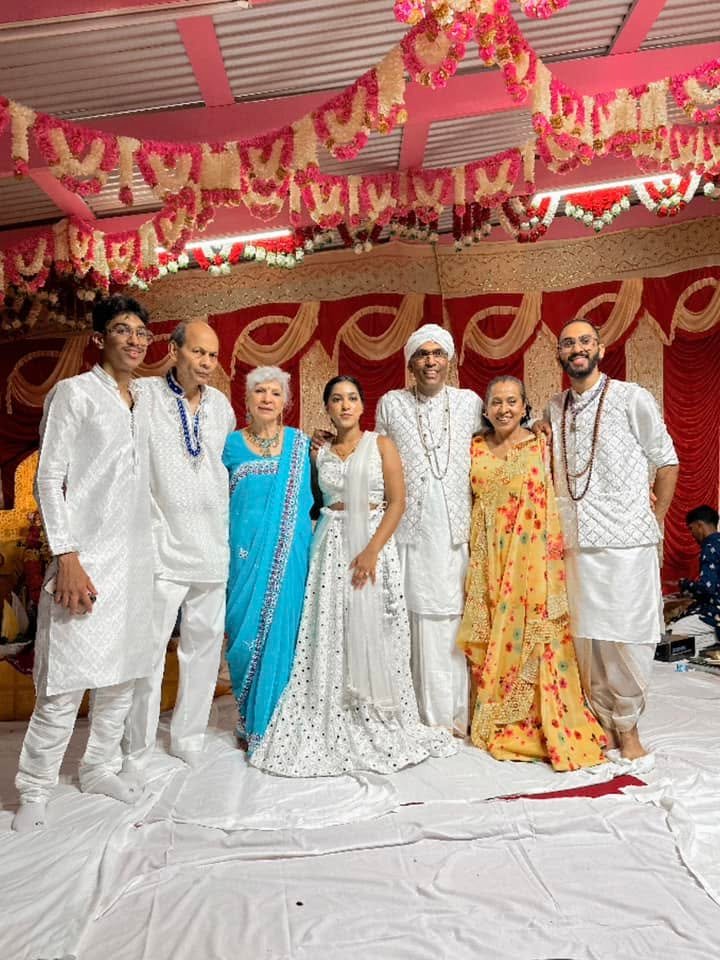
At the heart of Pt. Rudra’s understanding of Dharma is seva—selfless service. He believes that living according to Sanātana Dharma means recognizing and fulfilling one’s responsibilities while serving the people around us with sincerity, compassion, and humility. In this sense, dharma is not confined to the temple. It is lived in the way one serves family, community, coworkers, and anyone who comes into one’s life.
That same understanding shapes the way he views puja. To Pt. Rudra, ritual is more than the correct recitation of mantras or the making of offerings. Puja teaches us how to welcome the Divine: offering a seat, water, food, flowers, and care, much like receiving an honored guest into one’s home. That spirit of reverence should not end when the ritual concludes. If the same Divine Reality dwells within all beings, then serving others is itself a form of worship.
This idea also reflects one of the Advaitic teachings that has most deeply influenced him: the recognition that the same Divine Reality exists within all beings. For Pt. Rudra, this understanding naturally leads back to seva, compassion, and interconnectedness.
As a younger Pandit, Pt. Rudra is especially passionate about helping the next generation build a deeper relationship with Sanātana Dharma. He recognizes that many younger Hindus are no longer satisfied with being told simply to follow a practice because an elder said so. They want to understand why.
Why do we offer flowers? Why is havan performed? Why are specific offerings made? What do the rituals symbolize? What is their deeper spiritual meaning?
Pt. Rudra believes that answering these questions is essential. Understanding creates connection, and connection gives tradition meaning. In a digital age where young people are exposed to both accurate and inaccurate information online, he sees an important role for Pandits and teachers who can create a welcoming environment where questions are encouraged and answers are grounded in scripture.
He also believes that devotional music, bhajans, and kirtan can provide an accessible entry point for younger people, helping them first feel comfortable within the Mandir before gradually engaging more deeply with pravachans, katha, philosophy, and scripture.
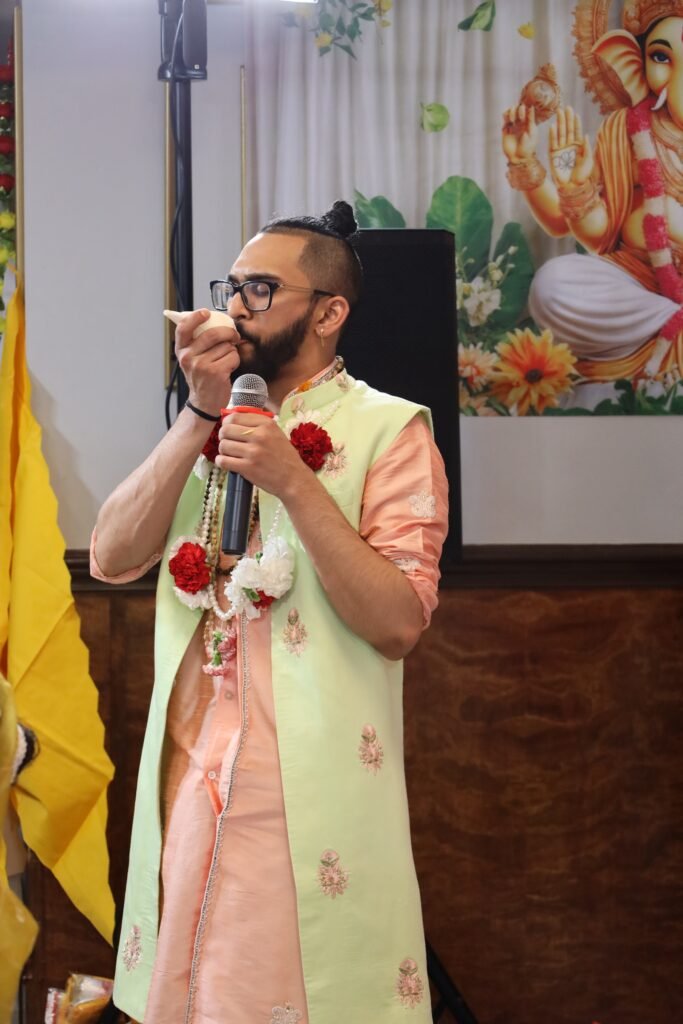
Looking ahead, Pt. Rudra sees his role clearly. He does not seek administrative authority within the Mandir. His calling is to serve as a Pandit—to perform puja, teach, give katha and pravachans, and support the spiritual needs of the community.
His approach to preserving Sanātana Dharma is ultimately rooted in both continuity and understanding: honoring what has been passed down while making sure the next generation understands why it matters.
As he puts it:
“Don’t just do it for the culture; do it for the religion.”
For Pt. Rudra, remembering one’s roots means going beyond cultural identity alone and reconnecting with the deeper Hindu spiritual heritage that generations before us worked to preserve.
Join us in Preserving
Sanātana Dharma
Every offering, no matter the size, helps us continue sharing the light of wisdom and devotion.